Meme coin trading: how Megga turned $1,000,000 from the trenches
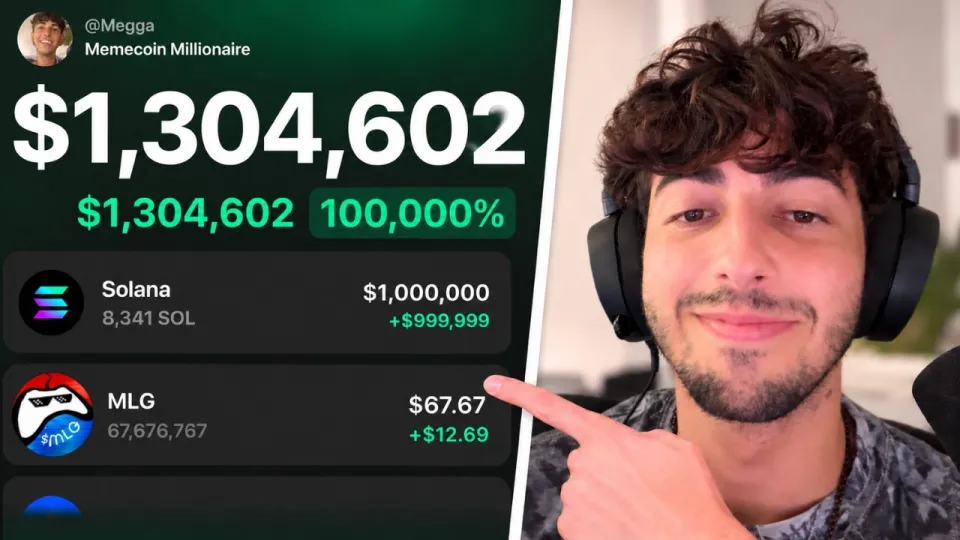
Video: How I Made $1,000,000 Trading Memecoins (FULL BREAKDOWN)
You can order the same kind of articles for your own video to boost it on YouTube and Google. Just message the Telegram bot @sat_sit_bot. The bot writes and publishes the articles itself (with your YouTube video embedded) on popular topical websites (no ads). Free trial — 50 articles.
· based on the channel Megga
Key takeaways
- Megga's video claims a $1,000,000 result from trading memecoins, built over years of full-time screen time rather than a single lucky trade.
- The core edge described is volume of reps: 9-12 hour sessions, hundreds of small decisions and a written record of what worked.
- Memecoin profits come from other participants' money, so liquidity, exits and position sizing matter more than the narrative.
- A free course is offered via Whop, and trading is routed through Padre, a low-fee platform linked in the video description.
- Losing streaks and drawdowns are treated as part of the process, not as a signal to quit or to size up.
Meme coin trading is a high-risk, high-reward activity where a trader buys newly launched tokens, holds them through a short burst of attention and sells into the liquidity that follows. Megga's breakdown of a claimed $1,000,000 result shows the same mechanics at scale: constant screen time, strict exits and a network of traders who share information. The free course linked in the video description is here: get the free memecoin trading course.
What meme coin trading actually involves
A memecoin trade is a bet on attention, not on cash flow. Tokens launch on venues such as Pump.fun and Raydium, get priced by a bonding curve or a thin order book, and live or die on how many buyers arrive in the first hours. That structure creates two very different jobs: finding a token before the crowd, and getting out before the crowd leaves.
Megga's account of the journey is not a story about one token. It is a story about repetition: scanning launches, checking holders and dev wallets, sizing a position, taking a loss, and doing it again. The $1,000,000 figure is the compound result of many small edges, not a single 100x hit.
The workflow behind a seven-figure PnL
A working memecoin process is boring in the details and fast in execution. The steps below reflect the routine implied by the video's framing and by how professional memecoin traders operate.
- Screen time first. Nine to twelve hours a day at the desk is the baseline described, and most of it is spent watching new pairs, not trading them.
- Filter before you buy. Check contract safety, holder distribution, dev wallet history and whether liquidity is locked. A token with a single wallet holding 30% is a transfer of your money, not a trade.
- Size for the exit, not the entry. Thin liquidity means your own sell order moves the price. Position size should be set so that exiting does not collapse the chart.
- Define the loss before the entry. A fixed percentage stop on every position removes the decision from the moment when emotions are loudest.
- Journal the result. Recording what was bought, why, and how it ended turns screen time into transferable skill.
A low-fee execution venue matters more than most beginners expect, because memecoin trades are frequent and small. The platform linked in the description is Padre trading platform.
Where the money actually comes from
Every dollar of memecoin profit is a dollar someone else lost. That is not cynicism, it is the accounting: memecoins produce no revenue, no dividends and no buybacks, so the only source of exit liquidity is the next buyer. Understanding this changes how you trade.
It means the question is never "is this token good?" but "who is on the other side of my sell order?" Early entrants profit when late entrants arrive; late entrants fund the exit. Traders who treat a memecoin as an investment rather than a trade are, structurally, the liquidity.
This is also why accusations of rug-pulling appear under every large memecoin PnL post. Some of that is fair criticism of specific launches, and some is simply the discomfort of recognising a zero-sum game. Either way, the practical lesson is the same: know which side of the trade you are on before you click buy.
Risk, drawdowns and the psychology of the trenches
Drawdown is a normal state for a memecoin trader, not an emergency. The people who last are the ones who keep position sizes small enough that a bad week does not end the account, and who treat a losing streak as information rather than as a verdict on their ability.
Three habits separate survivors from statistics:
- Fixed risk per trade. If a single loss can remove a meaningful share of the account, the size is wrong regardless of conviction.
- A hard daily stop. After a set number of losses in one session, the screen goes off. Tilt is the most expensive emotion in this market.
- Wallet hygiene. Phishing drains and malicious token approvals wipe out gains faster than any bad trade. Separate wallets for trading and holding, and revoke approvals regularly.
A common pattern described by traders in the same position is a big win followed by a series of avoidable losses: a 200x on one token, then a drained wallet, then a few racks lost chasing the feeling of the first hit. The recovery is always the same: return to the smallest size, rebuild the process, and stop trading from memory.
Questions traders ask before starting
How much capital is needed is the wrong first question; how much time is the right one. Memecoin trading rewards attention and speed, and someone with a full-time job cannot replicate a nine-hour session. That does not make it impossible, it makes the strategy different: fewer, larger-conviction trades on longer timeframes, with alerts instead of constant monitoring.
Networking is the second recurring theme. Finding a group of traders who share calls, review each other's exits and keep each other honest compresses years of learning into months. Public streams, X spaces and trading communities serve the same function for people who have no one locally. A track record of roughly $45,000 in all-time PnL is a reasonable point to start approaching more experienced groups, but the entry ticket is usually a clear process and useful questions, not the number.
Verifying a narrative or "tech meta" early is a skill built from pattern recognition across previous cycles, not from a checklist. The only reliable method is studying how earlier tokens behaved at the $30,000 market-cap stage and comparing structure, holder growth and volume to the current candidate.
Useful links
- Free memecoin trading course on Whop
- Padre trading platform with low fees
- Megga on Twitch
- Megga on TikTok
- Megga on X
Final takeaway
A seven-figure memecoin result is the visible end of a process that is mostly repetition, risk control and time at the screen, and Megga's breakdown is useful precisely because it shows the grind rather than a shortcut. The transferable lessons are unglamorous: size positions for the exit, cap daily losses, protect wallets from phishing, and treat every loss as data. Anyone expecting a single trade to change their life should read the liquidity section twice. For a structured starting point, the free course from the video is the most direct next step.
Questions & answers
How long does it take to become profitable trading memecoins?
There is no fixed timeline, but the video's framing implies years rather than months. Profitability comes from thousands of repetitions, a written record of results and surviving drawdowns without blowing up the account. Treat the first year as tuition.
Is memecoin trading just taking money from other people?
In accounting terms, yes. Memecoins generate no cash flow, so every profit is funded by another participant's loss. That does not make it illegal or illegitimate, but it does mean you must understand who provides your exit liquidity before you enter a trade.
Can I trade memecoins with a full-time job?
Yes, but not with the same playbook. A nine-hour monitoring session is not compatible with employment, so the realistic approach is fewer positions, alerts instead of constant watching, and longer holding windows. Expect slower progress and smaller size.
How much all-time PnL do I need before joining a trading group?
Groups generally care more about your process and the quality of your questions than a specific number. A track record in the tens of thousands, such as roughly $45,000, is enough to be taken seriously, provided you can explain your entries and exits clearly.
Source: How I Made $1,000,000 Trading Memecoins (FULL BREAKDOWN) · Markdown version